The 20th century changed the world of poetry. Major world events boded on the mind of many a writer, reflecting in their work. Diaspora in the British Empire, the two World Wars, and cultural and societal events was behind the poetic change that took place in the early 1900's.
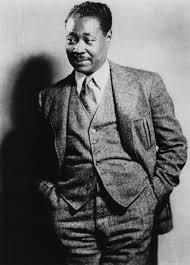 Claude McKay's "If We Must Die" is a poem that depicts the racial issues he experienced as a Jamaican born citizen living in white neighborhoods. His prose is as full of eloquence as any Romantic or Victorian writer, but the issue he is writing about is something either of those writers could not relate to: being persecuted or even killed because of skin color. "If we must die, O let us nobly die/ So that our precious blood may not be shed/ In vain; then even the monsters we defy/ Shall be constrained to honor us though dead!" (Greenblatt et al, 2006). When reading his poem from an objective stance, one could assume he is describing a bloody battle in any war during any time period. His ultimate message of the poem could be achieving honor, even in death.
 Seamus Henley writes about a blacksmith, ever present and non-changing though the world is changing around him: "He leans out the jamb, recalls a clatter/ Of hoofs where traffic is flashing in rows/ then grunts and goes in, with a slam and a flick/ To beat iron out, to work the bellows," (Greenblatt et al, 2006). Though the job of the blacksmith has not differed for decades upon decades, the world has, bringing with it industry and technology.
The world that these poets saw was very different from the world of the Romantics and Victorians. Things in the world of the Romantics and Victorians were easier in a way, more black and white. While the world of the 20th century writer became muddled with grey, full of detail and chaos.
References:
Greenblatt, et al. [Eds]. (2006). The Norton Anthology of English Literature: The Romantic
Period Through the Twentieth Century [vol. 2] (8th ed.). New York,
NY: W.W. Norton & Company, Inc.


