Showing posts with label short story. Show all posts

Sunday, November 10, 2013

What's in a Name? A Summary of LeGuin's short, "She Unnames Them"

In this powerful short story by LeGuin, the lead character is never named, but it is inferred that it is Eve, as in Adam and Eve of the Garden. Eve narrates the story, telling of how she convinced the animals that names are unimportant. One by one, the animals agree to let go of their names, though the Yaks have trouble with this concept. The female Yaks hold a council, deciding to let their names go, and after awhile, the male Yaks agree.
Pets, specifically dogs and parrots, take great issue in letting go of their names. As pets are closer to man than wild animals, it is understandable that they would have a harder time in letting go of their identifiers. Yet, Eve makes the pets understand that they can hold onto their capitalized names, like Froo Froo, if only they let go of their generic monikers, like dog or parrot, and so the pets too shed their names.
Among each other, nameless and free, Eve feels a closeness with the animals of the garden that she has never felt before: “They seemed far closer than when their names had stood between myself and them like a clear barrier: so close that my fear of them and their fear of me became one same fear.” The giving back of names (“loss of names” would hold the wrong connotation) by the animals makes them equal to Eve, but she realizes that she is the last being in the garden with a name, and it is not fair of her to hold on to her name when she asked all the animals to give theirs back.
Eve goes to Adam to tell him that she is giving back the name bestowed by “you and your father […] It's been really useful, but it doesn't exactly seem to fit very well lately. But thanks very much! It's really been very useful." Though Eve’s actions are revelatory, Adam does not care. He is described as working on something, putting parts together, and overall he is only half-listening to what Eve is telling him. The reader (and Eve) know that Adam does not understand the import of what she has done by forgoing her name when he asks the stereotypical patriarchal question: “When’s dinner?”
Names can have power, and that power can be a divisive one, or at least that is what LeGuin insinuates with her short story. The binary names humans give to gender (man, woman), the names humans give to animals, or to objects, those are ways that humans seek to control what is around them, not to give meaning, but to separate themselves from nature, to say “I am better than you. I have control over you, and with that control, I will name you and distance you from me”. Eve, like other women in sf stories, does the opposite by placing herself in nature and making herself an equal part of nature. Again, the motif of a loss of identity is explored in this story, and again the author clearly states that one can be an individual while at the same time surrendering themselves to the communal way of living. It is an idea that humans struggle with, because humans only know individuality in the form that it has been handed to us for generations: it comes with separation from others, in the form of gender, class, or racial individual names and personalities.

With Adam’s response, and his lack of interest, LeGuin is stating that men may not be ready to be a part of nature. To be equal with women, and then to be equal with nature, is something men may not conceive of just yet.

Sunday, May 12, 2013

The Brilliance of James Tiptree, Jr. (or as she was born, Alice Sheldon)

Found on outofeverywhere.wordpress.com

This is a collection of stories by Tiptree, collected before Tiptree was discovered to be a woman. The introduction by Robert Silverberg is almost comical, especially when he defends the questioned masculinity of Tiptree: "There is something ineluctably masculine about Tiptree's writing. I don't think the novels of Jane Austen could have been written by a man, nor the stories of Ernest Hemingway by a woman, and the same way I believe the author of James Tiptree stories is male" (xii). Silverberg's supposition calls into question the definition of male and female writing. If in his mind Austen is the quintessential female writer and Hemingway the male, then his radar concerning the gender of authors is seriously misguided, more notably when he compares Tiptree to Hemingway. Silverberg manages to unknowingly pen several sexist claims, like Tiptree must be male because he talks about things like fishing, hunting, travelling, and the government with such authority. Reading the introduction reminded me of LeGuin's article "The Carrier Bag of Fiction", where she talks about the origins of what is intrinsically human, and it turns out not to be violent (and supposed) male tendencies, but the ability to gather, (a supposed) female tendency. It seems as if Silverberg is trying to legitimize Tiptree's place in science fiction by insisting on Tiptree's maleness, as if the possibility of Tiptree's womanhood would do the opposite.
There are two short stories I read in the collection, starting with “The Girl Who Was Plugged In”. If anything, the story takes place in both a utopia and dystopia. The world as laid out by Tiptree has outlawed advertising. It was deemed immoral, and word of mouth is the only way companies have of getting their products sold. That’s where J. Burke comes in. She’s described as ugly, but company execs have their own ideas on how to make her pretty. After she attempts suicide, they know she is desperate enough to accept their offer: to plug her brainwaves into a beautiful humanoid. Through the new J. Burke (re-named Delphi when in humanoid form), the execs are able to wield an alluring and subtle spokesperson for their products. A man falls in love with Delphi, and discovers in part her secret. When he finally meets the real Delphi (J. Burke), he is disgusted at her appearance and accidentally kills her.
The story is a reminder of how humans will do their best to undermine the law, even when the law is put in place to enhance their rights. Another theme of Tiptree’s short is the lie women must keep up with their looks. J. Burke/Delphi could be an analogy for said lie, with J. Burke being how men view women without “cute” clothes/make-up on, and Delphi being how they view women in their costumed perfection. In the story, Delphi’s admirer was naïve in believing she was a paragon all the time, and he is disillusioned, even horrified, to discover his real love shares her likeness with a monster.
In “The Women Men Don’t See”, a group of people have to survive a plane crash on a sandbar in the Yucatan. Two women make up part of the group, and two men make up the other. The story is told from a male perspective, with the man constantly being surprised in the unflappable nature of the two women. When he expects them to complain, they remark on the scenery. When he expects them to make demands, they make kind concessions. This second story I read really had little to do with utopia/dystopias, and everything to do with how men expect women to act, versus how women can act.
Overall, the book is a great example of how women are seen not just in science fiction, but through the eyes of men. What’s ironic about it is that Tiptree managed to write from the male perspective so convincingly she had everyone believing she was a male, and they thought it patronizing and progressive of “him” to take small feminist stands in his writing. How must they have viewed Tiptree’s writing after discovering he was a she? I have an idea as to what they were thinking, because Silverberg puts a postscript at the end of his intro, describing the letter he received from Tiptree. She confessed to him her true sexuality, and of it, Silverberg wrote, “What I have learned is that there are some women who can write about traditionally male topics more knowledgeably than most men, and that the truly superior artist can adopt whatever tone is appropriate to the material and bring it off” (xviii).

Tiptree Jr., James. “The Girl Who Was Plugged In”.  Warm Worlds and Otherwise. New York: Doubleday, 1973. Print.

            -. “The Women Men Don’t See.” Warm Worlds and Otherwise. New York: Doubleday, 1973. Print.

Saturday, July 28, 2012

"The men are coming! The men are coming!" A summary of "When It Changed" by Joanna Russ


File:Avon Science Fiction Reader 1.jpg
Cover of the fantasy fiction magazine Avon Science 
Fiction Reader no. 1 (1951) 
featuring "The War of the Sexes" 
by Edmond Hamilton.
Source: Wikimedia Commons
On the planet Whileaway, there are no men. The women hardly notice because they have learned to survive, thrive, and reproduce without penetrative intercourse. That is not to say the women of Whileaway do not enjoy intercourse, but they enjoy it with other women, who they take as wives in a marriage of equality.
The narrator, Janet, of Russ's short story appears from the beginning of the story to be a man. It is not until later that the reader understands that the main viewpoint is a woman, a woman speaking of winning duels, wielding guns, and loving her wife, Kate, and their three collective daughters.
Four male astronauts land on Whileaway, and interrogate Janet and her family. “Where are all the people?” the men keep asking. Janet does not understand why they keep asking that, but then she sees that when the astronauts say 'people' they really mean 'men'. She tells the astronauts that the men died out six-hundred years ago. At this news, one of the astronauts gives a teary sigh and then says, “We're here now.”
Kate believes the men to be dangerous, and even tries to shoot one of them but Janet stops her. Later, Janet wishes she would have followed Kate's instincts and gotten rid of the newcomers. It dawns on her that the men are going to take over the planet of Whileaway, especially after one of them tells her that they need 'the cells of Whileaway'. She tells him that he can have all the cells he needs, but he smiles and tells her they cannot just be given the cells, they must be given through the act of penetrative intercourse (though he doesn't quite say it like that). He tells Janet the Whileaway kind of life is 'unnatural', and to make it natural once again, a dual-natured society must reign again. When Janet tells him that she already has a wife in Kate, the astronaut smiles and assumes that their relationship is based off of a mutually agreed need to survive monetarily. Actual love between two women is beyond the astronaut's understanding.
To the Whileaway women, the astronauts seem more like apes than like human men. Janet, Kate, and their daughters do not even find the men attractive. Janet asks her daughter if she would kiss a man, and her daughter scoffs and says she'd sooner kiss a toad.
The women of Whileaway are already dual-natured, even if the astronauts cannot see it. Janet thinks wistfully of her daughter going off for the traditional bear-hunt, like a right of passage for a Whileaway woman to become an adult. And Janet shares many traits that would be considered manly as she seems to protect her family, know how to use a gun, and duel to the death with other Whileaway women. At the same time, Janet loves her daughter and loves being a mother. Kate is not a 'weak' woman either, though she seems gentler than Janet. She does not like guns, and so it is a surprise when she grabs Janet's gun with ease and tries to shoot the invaders.
Whileaway women defy common stereotypes of women in our culture, and the way they perceive men (though exaggerated) serves as a good example of the exact chasms that separate the two genders.


Russ, Joanna. “When It Changed”. New York: Doubleday, 1972. Print.      

Wednesday, May 9, 2012

Promising new author: Elizabeth Baxter


British author Elizabeth Baxter of the new short story collection Circle Spinner is worth taking note of. She has been writing since she was six years old, and Circle Spinner is her debut novel. She has two more novels coming out this summer: Summer Storm and Everwinter.

Synopsis for Circle Spinner
Take a look at my book!Circle Spinner and Other Tales by Elizabeth Baxter 
Five fantasy and science fiction stories that will sweep you to other worlds.


Circle Spinner
Edith longs for a quiet retirement. She longs for her cottage by the sea and the company of her dogs. But the world, it seems, hasn’t done with her yet. For Edith is a Circle Spinner, the only one who can save the city of Shine from the terrifying Pantheon. 6000 words


The Following Star
Angus walks the corridors of a starship with only his dog for company. He guards a precious cargo: a population of colonists searching for a new home. But when a sudden course change threatens the ship, Angus discovers that all is not as it seems. 6000 words


One of those Days 
Simon is a high-flyer. Good job. Nice apartment. It’s not his fault if his company is involved in shady dealings with the fairy realm is it? No, if he keeps his head down and mouth shut, Simon is sure everything will be okay. But the Prince of Fae and his motley band of followers have other ideas. They have Simon in mind for a very special mission. 7000 words

The Blessing of Silence
The game has been played for years uncounted. Sakara has watched players come and go and been powerless to save them. She is a slave. What difference could she possibly make? But when a new player suddenly enters the game, Sakara begins to realize that she holds within her the power to end the game forever. 6000 words

Fallen Angel
Matthew’s faith is unshakable. A soldier in the United Church, he has dedicated his life to hunting demons. But when his latest mission goes wrong he discovers a secret that will cast everything he believes into doubt. 6000 words


Reviews for Circle Spinner from Amazon: 
"This was the first book I got on my new kindle. I didn't want to go straight into a novel because I wasn't sure if I'd like reading off a screen so I went for something shorter first. It was a good move because I really enjoyed the collection and the kindle didn't hurt my eyes after all. My main problem with short stories is that you don't have enough time to get to know the characters but this wasn't an issue here. You get to know all the characters really well and I found myself rooting for them. I liked some stories better than others, and my favorite was probably The Following Star as I loved Dog. I think there's probably something for everyone in this"

"I enjoyed each of the stories as each provided me with a different emotion and sub-genre: danger, sadness, happiness, comedy and action. The titular story was a great start to the collection: great characters from tired Edith to the evil demon Tenoquitil. I loved the relationship between Angus and dog in the Following Star and really enjoyed the humour in One of Those Days. As I intimated before, the collection provides something for different readers. Summer Storm, although of the fantasy genre (as apposed to sci-fi) proved to be an interesting introduction to what promises to be an exciting story. Overall, an easy to read and well written collection."


Baxter has a web blog that she uses to promote her writing, but the added wonder of her blog is that she also uses it to review and promote indie authors. Check out her blog here: http://elizabethbaxter.blogspot.com/

You can purchase Circle Spinner from this Amazon link, or find it via Baxter's webpage. Look for her on Goodreads as well!

Friday, January 27, 2012

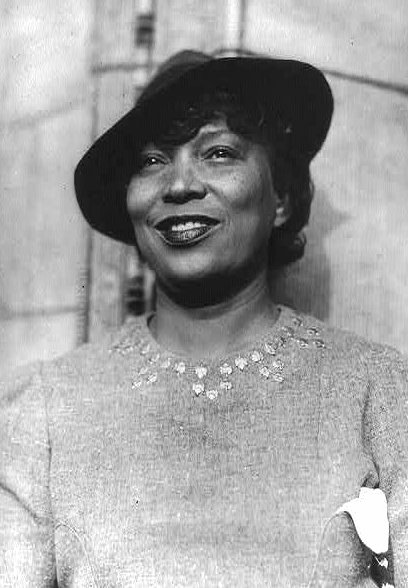
An Analysis of Zora Neale Hurston's short story "Sweat"


File:Hurston-Zora-Neale-LOC.jpg
Zora Neale Hurston-
American Author (1935)
By: Author unknown
Source: Wikimedia Commons


 Hurston's story "Sweat" depicts an abusive and selfish husband, Sykes. Delia, Sykes wife, has taken physical, emotional, and verbal abuse from Sykes for more than 15 years. Sykes treats his wife as a petulant teenager treats his mother: with little respect, but still expecting to be fully taken care of. Certainly, Sykes has some sort of mother-complex, even preferring big women to the skinny Delia. Though his mistress is described in an unflattering light ("a hunk uh liver wid hair on it"), it could be that Sykes finds bigger women attractive because he associates soft curves with a maternal figure.


Sykes is financially dependent upon his wife (since all he does with his own wages is gamble) and that makes him angry, angry enough to want to punish Delia, and even kill her. Though Delia's situation is not a happy one, it is not a rare one either. Any man is capable of the darkness found in Sykes. During the story, the other men in town describe the sort of man they believe Sykes to be: "There's plenty men dat takes a wife lak dey do a joint uh sugar-cane. It's round, juicy an' sweet when dey gits it. But dey squeeze an' grind, squeeze an' grind an' wring tell dey wring every drop uh pleasure dat's in 'em out. When dey's satisfied dat dey is wrung dry, dey treats 'em jes lak dey do a cane-chew. Dey throws em away." Many men, whether they are black, white, Asian or Hispanic, can treat women just as Sykes treats Delia.

All the same, Delia does seem somewhat stuck in her situation because of her race. The men in town gossip about Delia and Sykes, fully aware of how he has beat her for their entire marriage. Not one of the gossipers mentions aiding Delia, or calling the police on her behalf. The one thing that works as a temporary deterrent against Sykes is when Delia threatens to call "the white folks" on him. Would Delia have felt as helpless against an abusive husband had her character been white? I think so. Any woman who takes physical abuse for fifteen years might feel as though she had no other option but to take the abuse for the remainder of her marriage. However, this warrants repeating: Delia does seem somewhat stuck in her situation because of her race.

Friday, July 1, 2011

"N."- A Short Story of O.C.D., Different Dimensions, and Stonehenge

File:Stonehenge Lomografía.jpgStephen King is the author of countless short stories. Two of his most famous short story collections are Nightmares and Dreamscapes and Just After Sunset. Recently, he released another set of short stories titled, Full Dark, No Stars. Many people that have reviewed Full Dark, No Stars have said it is a book of dark stories with dark endings. While that may be true, perhaps one of his most strange and terrifying short stories would be "N.".

"N." was featured in Just After Sunset and is longer than most of the stories in the book. The length of the story is part of the allure; it is a long enough story to build the story and characters, but the reader is relieved the story ends because of how truly disconcerting it is. "N." is a told from the perspective of different patient-case studies written down by N.'s psychiatrist. N. used to be a regular man with a boring job as an accountant. When passing by Ackerman's Field one day, he is drawn to explore the field by a force he cannot name. Once at the field, he is changed by what he finds there. He realizes Ackerman's Field is a "thin" spot in reality, where demons are trying to break through to the human world.

In order to protect the world, he feels he has to go through obsessive compulsive behavior (OCD) rituals to keep balance in the world. After completing each OCD task, N. believes he has kept the monsters at bay by maintaining the rituals that a sane world needs in order to function. It is his newly-acquired OCD symptoms that prompt N. to see a psychiatrist. Yet, by sharing his discovery of the field, N. passes the torch on to someone new after he commits suicide. Suicide, as N. believes, is the only way to end the guardianship of the field. Though the psychiatrist is not sure whether to believe N.'s fantastical story of Ackerman's Field, he was also wants to see the existence of the field for himself.

File:Field.JPGDue to the increased demonic presence in the field during summer months (after the Summer Solstice), the psychiatrist also cannot handle the immense responsibility that comes with merely knowing about Ackerman's Field. He too commits suicide. His sister finds his patient transcripts from his sessions with N., though they are labeled "BURN THIS". Curiosity drives the sister to visit the field as well, even as it is only implied that she does so through her letter to a friend, warning said friend not to go to Ackerman's Field. The last few pages of the story show that the guardianship of the field is ceremoniously passed down by a cycle of discovery, insanity, and suicide.


Ultimately, "N." perfectly sums up the feelings behind OCD behavior. Indeed, many people afflicted with OCD feel that their monotonous rituals "right the world", and that if they don't carry them out, it would put their whole world out of balance. Those who have OCD repeatedly wash their hands, check the locks, or touch a surface to assure themselves that the world is still there, and that the world is okay. N. feels the same way: "I had to keep renewing the protection [of the field] with symbolic acts," (King p.316).

Ackerman's Field is a loose representation of Stonehenge. King even has N. refer to Stonehenge in comparison with the field: "[Stonehenge could be] protecting something  [...] Locking out an insane universe that happens to lie right next to ours," (King p.317). N. knows that without the formation of the stones at both Stonehenge and the field, the other universe would be allowed to come into the human world. The problem with the stones is that there has to be a specific number of them to keep the protection going strong, eight total (a good and even number, as far as OCD N. is concerned). When human eyes look at the field, there are only seven stones, and that's bad. Only a camera or anything else with a lens can restore the eighth stone. Even then, the stone is only replaced temporarily. The guardian of the field has to keep coming back to the field to restore the stone, because the eighth stone sometimes winks out of existence by pure will of the demons that are trying to get through.

"N." is comparable to stories like "The Ring" or "The Grudge", as they are all similar stories depicting an entity that infects, kills, and spreads. However, "N." is a much scarier story because of the monsters N. describes seeing in the field, and because of King's trademark in being able to manipulate such a simple setting (Ackerman's Field) into a horrifying one.

Sunday, August 29, 2010

What Makes a Good Short Story


A short story does not require length, but like any story, it does require a plot and structure. Plot and structure are crucial elements of fiction because without them, there would be no beginning, middle, or end of a story. Although, some short stories can illustrate that the middle of the story is not as necessary, much like Margaret Atwood does with her short story Happy Endings. Atwood's story chronicles the different lives her main characters John and Mary could live out together, apart, or even dead. The main theme of Happy Endings is that the only ending that is certain for her characters is death, and that the middle of a story is the hardest to write. She exemplifies this fact by focusing mostly on the beginnings and endings concerning her characters.
In order for a reader to make sense of a story, each event must have a purpose that leads to the next event in a fairly reasonable way. Following the Three Act Structure is the easiest way to build a successful plot, (Plot, n.d.). Frank O’Connor’s short story, Guests of the Nation, demonstrates the simple use of the Three Act Structure: setup, confrontation, and resolution. In the beginning, we learn who the characters are: Irish and British soldiers who have become fast friends. Then, it is revealed that the British soldiers are actually hostages of the Irishmen, and they might have to be killed later on. The resolution is slow and painful as the two British soldiers are executed by their new friends.

Plot and structure are the backbones to any good story. In a short story, plot and structure are even more important since there are less words to express the importance of the theme, characters, and events. Margaret Atwood and Frank O’Connor are two authors that understood how to properly use plot and structure to their story’s advantage.

References:
Plot. (n.d.). Elements of a novel, structure and plot. Retrieved August 25, 2010, from http://www.musik-therapie.at/PederHill/Structure&Plot.htm

Tuesday, August 24, 2010

Parables, Fables, and Tales, Oh my!

There are many types of short stories, but three in particular that share traits and differ in other ways: parables, fables, and tales.

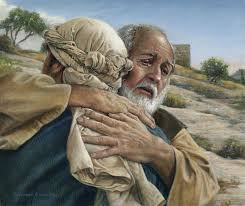
The difference in tone between parables, fables, and tales are the seriousness which is conveyed in each type of short story, starting with a parable. A parable is the most sanctimonious of all short stories, illustrating a religious or spiritual ideal through the story, (Chea, 2010). In the New Testament, the parable "The Prodigal Son" teaches forgiveness and humility because the son leaves to have a life full of fun but is welcomed home again with open arms after he does not find great success.

A fable, while still wishing to impart a moral to its audience, has less of a severe tone than a parable, often full of witticism and talking animals. Another element of the fable is when the moral of the story is easily stated, like in Aesop’s The Wolff and the Mastiff . After reading it, one can understand that freedom of choice is more desirable than being well-fed and cared for. Likewise, the fable "The Tortoise and the Hare" fully demonstrates the cliche 'slow and steady wins the race'.

Tales differ from parables and fables because they do not necessarily focus on a moral, but rather the events of the story and the emotions the events impart on the reader, (Chea, 2010). Petronius’ The Widow of Ephesus is a tale that causes the reader to feel pity for the widow as she loses one man, only to then cause the reader joy as the widow then gains another lover after having gone through such trials and tribulations.


Chea, S. (2010, February 18). "The different types of short fiction". Retrieved on August 24, 2010, from the Associated Content Database: http://www.associatedcontent.com/article/2700033/the_different_types_of_short_fiction.html?cat=38